 POPULAR
Cotigao
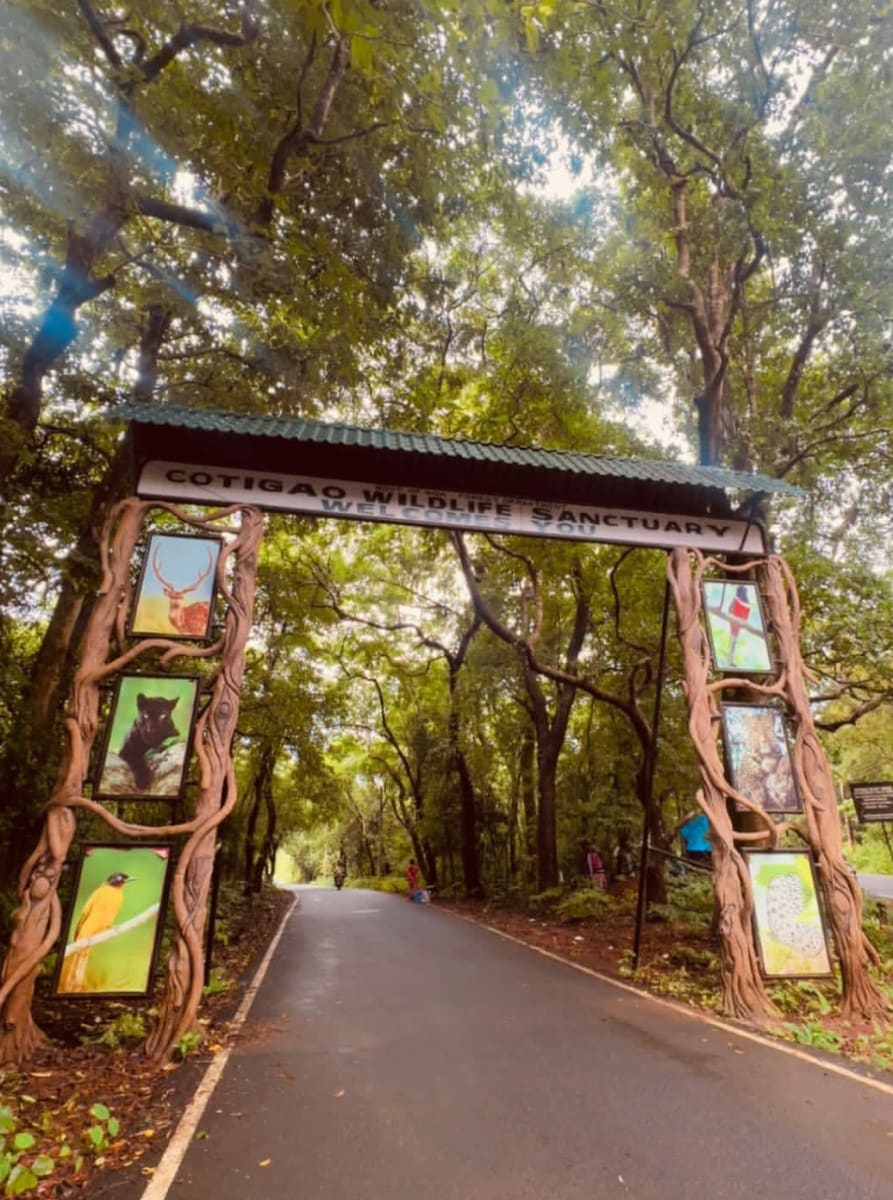
Cotigao Wildlife Sanctuary was established in 1968–69 to safeguard one of Goa's most ecologically significant forest tracts, situated in Canacona Taluka along the Goa–Karnataka border. Spanning 85.65 km², it is the state's southernmost protected area and its second-largest sanctuary, characterised by hill ranges along the north and east that gradually slope toward the west. The terrain supports predominantly moist deciduous forest, with patches of semi-evergreen and evergreen vegetation occurring in select pockets. This ecological diversity, combined with favourable climatic conditions, has resulted in a rich concentration of flora and fauna within a relatively compact area. Canopy cover in several zones reaches up to 30 metres, restricting sunlight penetration to the forest floor and sustaining a distinct microhabitat beneath. The sanctuary provides critical habitat for the melanistic (black) leopard, sloth bear, painted bat, Indian giant squirrel, flying squirrel, slender loris, and Indian pangolin, alongside a notable population of avifauna including the Indian pied hornbill, Malabar trogon, and larger golden-backed woodpecker. The perennial Talpona River flows through the sanctuary, supporting the surrounding ecosystem and offering favourable conditions for wildlife observation, particularly near dusk. Visitor infrastructure includes eight designated nature trails ranging from 500 metres to 5 kilometres, six elevated observation towers constructed for wildlife viewing, a dedicated Butterfly Park, and an eco-tourism complex at the entrance comprising a nature interpretation centre, forest ranger office, rescue centre, and visitor amenities. Regulated private vehicle safaris, accompanied by forest department personnel, are permitted along designated forest tracks. The sanctuary remains open to the public from 7:00 AM to 5:30 PM daily, including weekends and public holidays. Visitors are advised that the period from October to March offers optimal conditions for both accessibility and wildlife activity, coinciding with cooler temperatures and the post-monsoon flow of the sanctuary's streams and water bodies.