 HIDDEN GEM
St. Augustine Tower
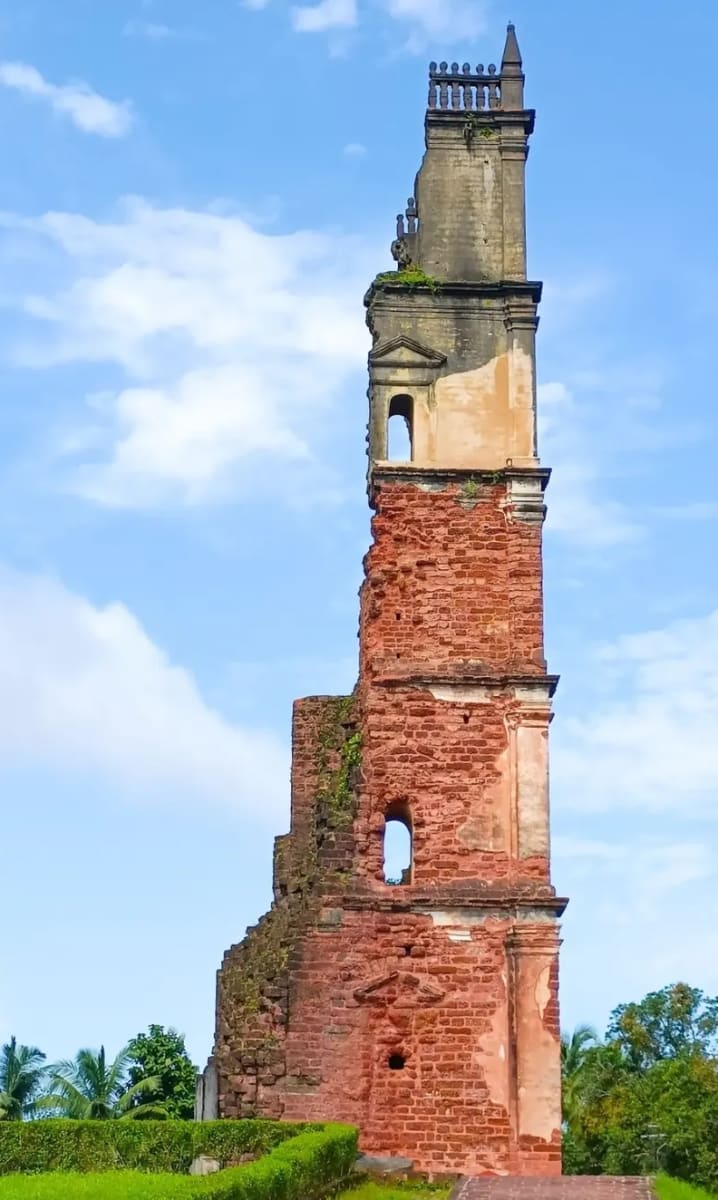
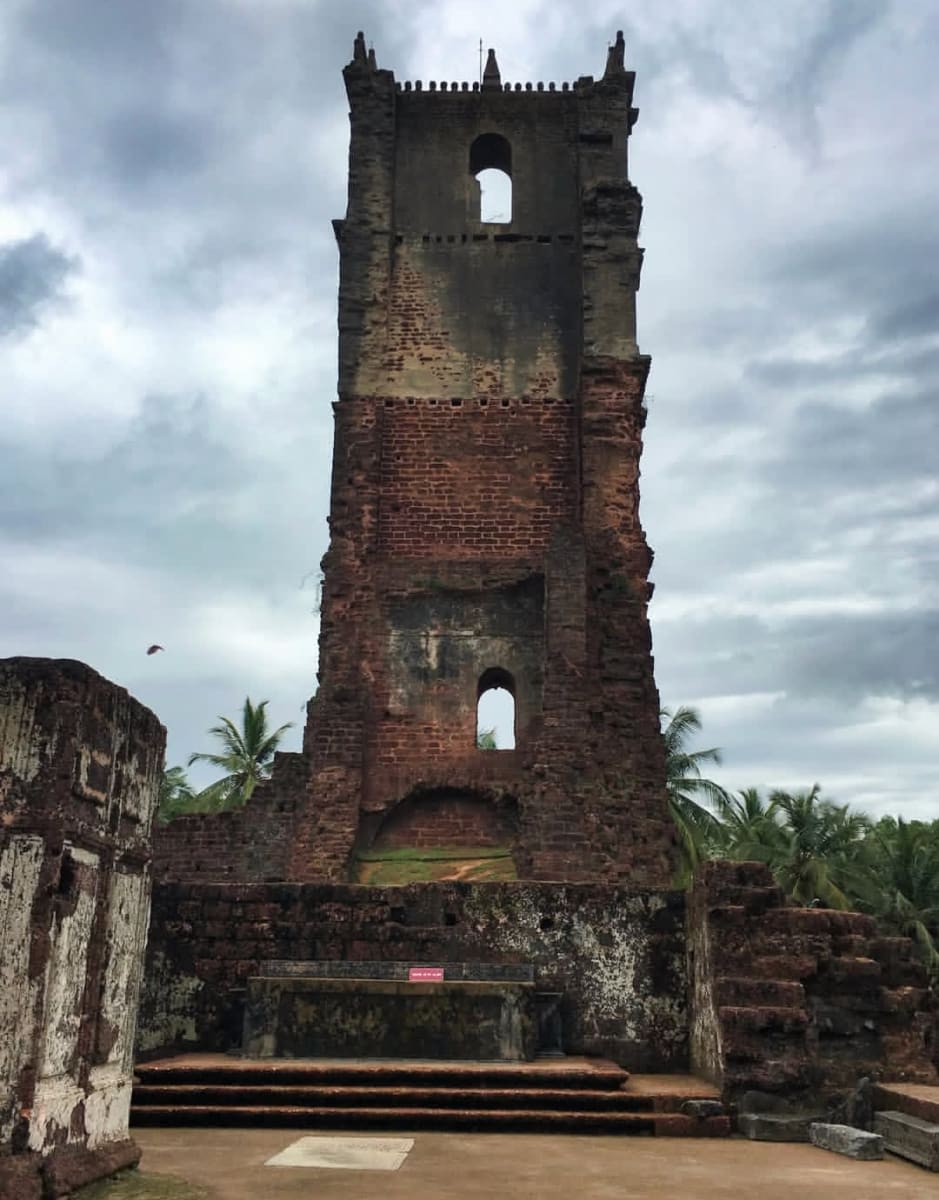
I almost missed it — walking past on the way to the Basilica, the way most people do. But there it was, rising up out of the trees: a tower, alone, 46 metres of laterite stone standing where an entire church used to be. They call it the Church of St. Augustine, though what remains is really just a ruin and this one surviving tower. The church itself was completed in 1602, built by Augustinian friars who'd arrived a few decades earlier — and back then, it was one of the largest churches in all of Goa. Today it's part of the same UNESCO World Heritage listing as the rest of Old Goa's churches and convents, though far fewer people seem to know it's here. There are no crowds at this one. No tickets, no queues. Just quiet, birdsong, and the strange feeling of standing somewhere that used to hold four altars and eight chapels, now reduced to walls and a single stubborn tower. It's easy to forget, walking through Old Goa's more famous sites, that this whole area was once a city of churches — twenty towers are said to have stood across these hills. Only this one is still standing, and even that feels less like a plan and more like an accident of history. The rest collapsed slowly, over more than a century, until nothing was left but this. Somewhere in these ruins, archaeologists once found the remains of a Georgian queen — the kind of detail you stumble on by accident, much like the tower itself.